BEIJING, Sept. 28 (Xinhua) -- Despite lingering global economic fragility, China's centrally-administered state-owned enterprises (SOEs) have seen strong growth in the past five years.
Official data showed that the total assets of China's central SOEs reached 50.5 trillion yuan (about 7.62 trillion U.S. dollars) by the end of 2016, an 80 percent jump from the end of 2011.
Behind the robust growth was years of non-stop reforms since the 18th National Congress of the Communist Party of China (CPC) in 2012, which served as a strong boost for their efficiency and vitality.
"Looking back over the past five years, China has completed the top-level design of the SOE reform, making it more systematic, comprehensive and coordinated," Xiao Yaqing, chairperson of the State-owned Assets Supervision and Administration Commission (SASAC), said at a press conference Thursday.
RESTRUCTURING UNDERWAY
The central government has been actively restructuring its SOEs in a bid to improve their efficiency and competitiveness, with the number of central SOEs falling to 98 from 117 five years ago.
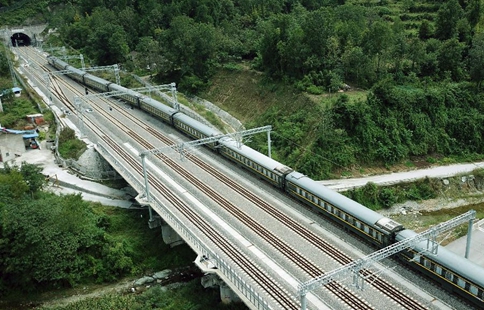
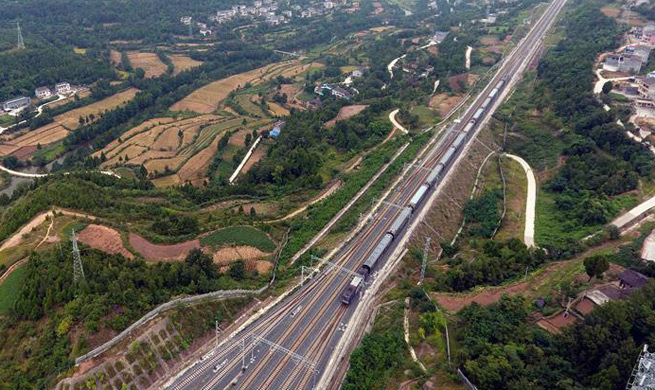
Since the 18th CPC National Congress, 34 central SOEs have been restructured, including a merger between two of China's top bullet train makers and another between two major steel producers.
Meanwhile, two new firms, Aero Engine Corporation of China and China Tower, were established to meet industrial development needs.p "Technology and market development is the strongest drive for the central SEO restructuring," said Xiao, describing the restructuring efforts in the past five years as "unprecedented."
The mergers and reorganizations have helped the SOEs lift their global competitiveness by optimizing allocation of industrial resources, and up to 48 centrally-owned SOEs made it into the Fortune Global 500 rankings this year, according to Huang Danhua, vice-chairperson of the SASAC.
Besides creating industrial giants, the restructuring offered a boost to their technological innovation capabilities and at the same time reduced management and production costs, according to Huang.
At a cabinet meeting Wednesday, authorities reiterated the need to further advance the restructuring of the central SOEs, especially in equipment manufacturing, electricity, communications and chemical industries.
DEBT RISKS UNDER CONTROL
The SOEs, especially the centrally-administered ones, have played a vital role in China's ongoing supply-side structural reform by leading the excess capacity cuts and keeping their debt ratio under control.
From January to August this year, the central SOEs have beaten government-set targets by reducing 16.14 million tonnes of steel capacity and 55.1 million tonnes of coal capacity.
These companies have also trimmed 88.5 billion yuan of annual losses by dealing with "zombie companies" and loss-making enterprises.
Meanwhile, debt risks at the central SOEs are under control as the companies maintained a steady debt ratio over the past five years, data from the SASAC showed.
By the end of August, the average debt-to-asset ratio of central SOEs dropped to 66.5 percent, 0.2 percentage points lower than the beginning of this year, according to Xiao.
"The debt risk level at central SOEs is reasonable, appropriate and totally controllable," he said.
MIXED-OWNERSHIP REFORM
The mixed-ownership reform, which diversifies the ownership structure of SOEs, has started to take off in recent years as their monopolies in many sectors shut out smaller firms and caused low efficiency and poor service.
So far, up to 68.9 percent of central SOEs at all levels have been involved in the mixed-ownership reforms, while 47 percent of local SOEs were involved, according to SASAC data.
In key sectors like electricity, telecommunications, aviation and military industries, 19 enterprises were chosen to start such reforms, according to Peng Huagang, deputy secretary-general of SASAC.
In August, China Unicom, one of the country's telecom giants, announced plans to bring in private investment mainly by issuing shares for companies including China Life and Tencent, marking the top-level mixed-ownership reform at state firms.
Peng revealed that the authorities are reviewing plans for other SOEs to go through such reforms.
"The SOE reform is a open process, which aims to attract partners in all types of ownerships," said Xiao.
China also welcomes the participation of foreign enterprises in the process, if they are interested, he said.
"With reforms going deeper, the SOEs will take on new looks and make new achievements," he said.